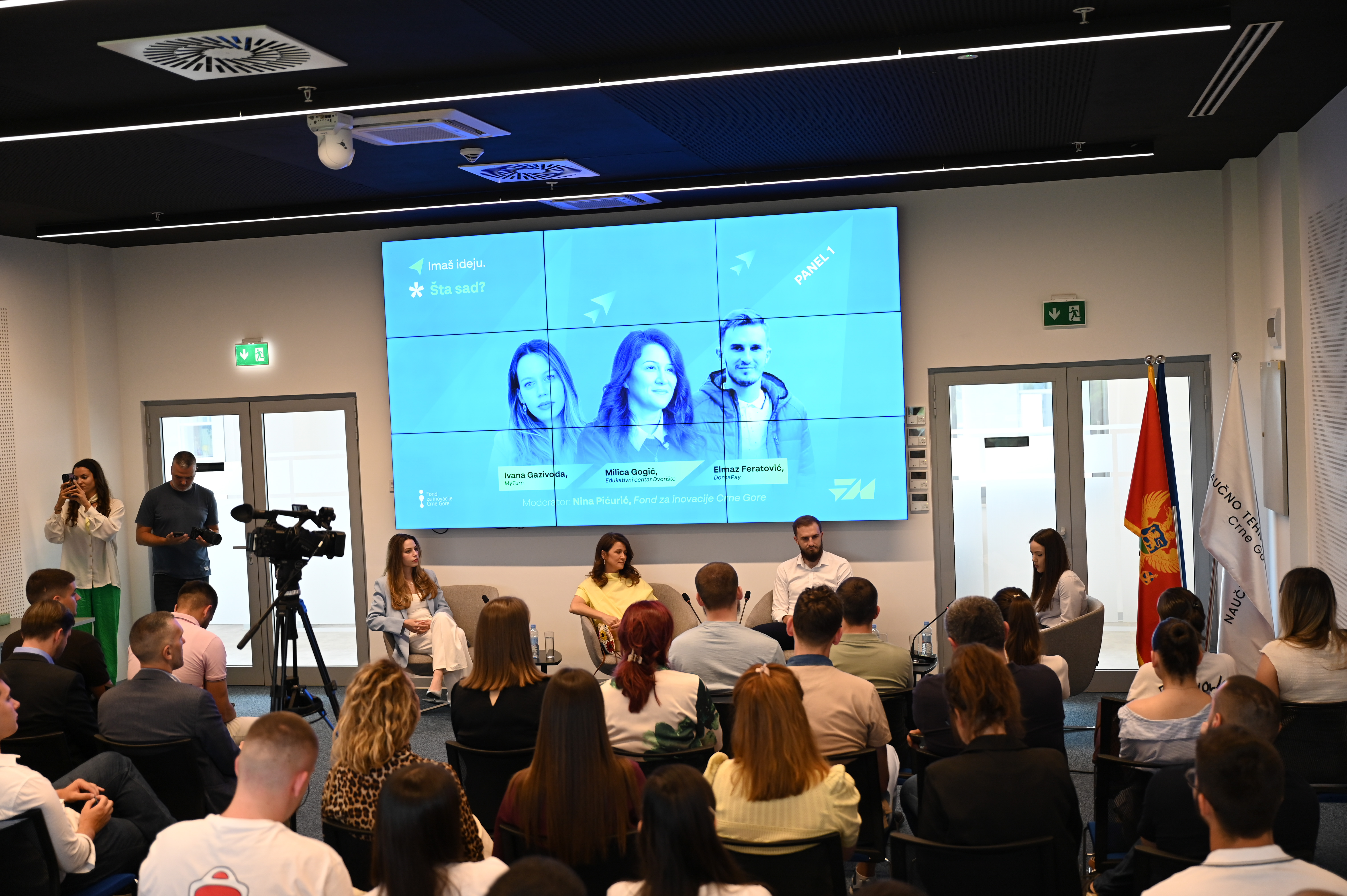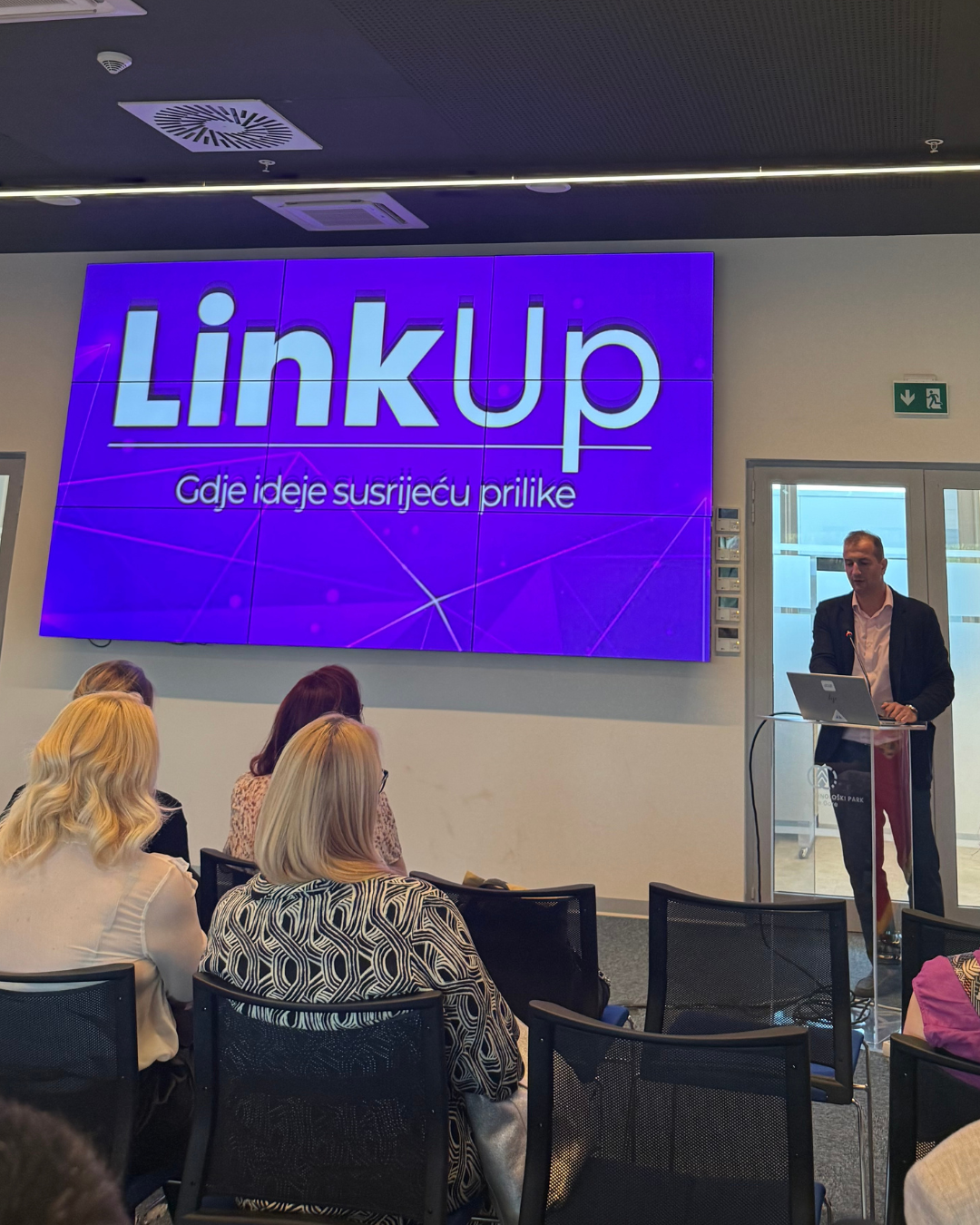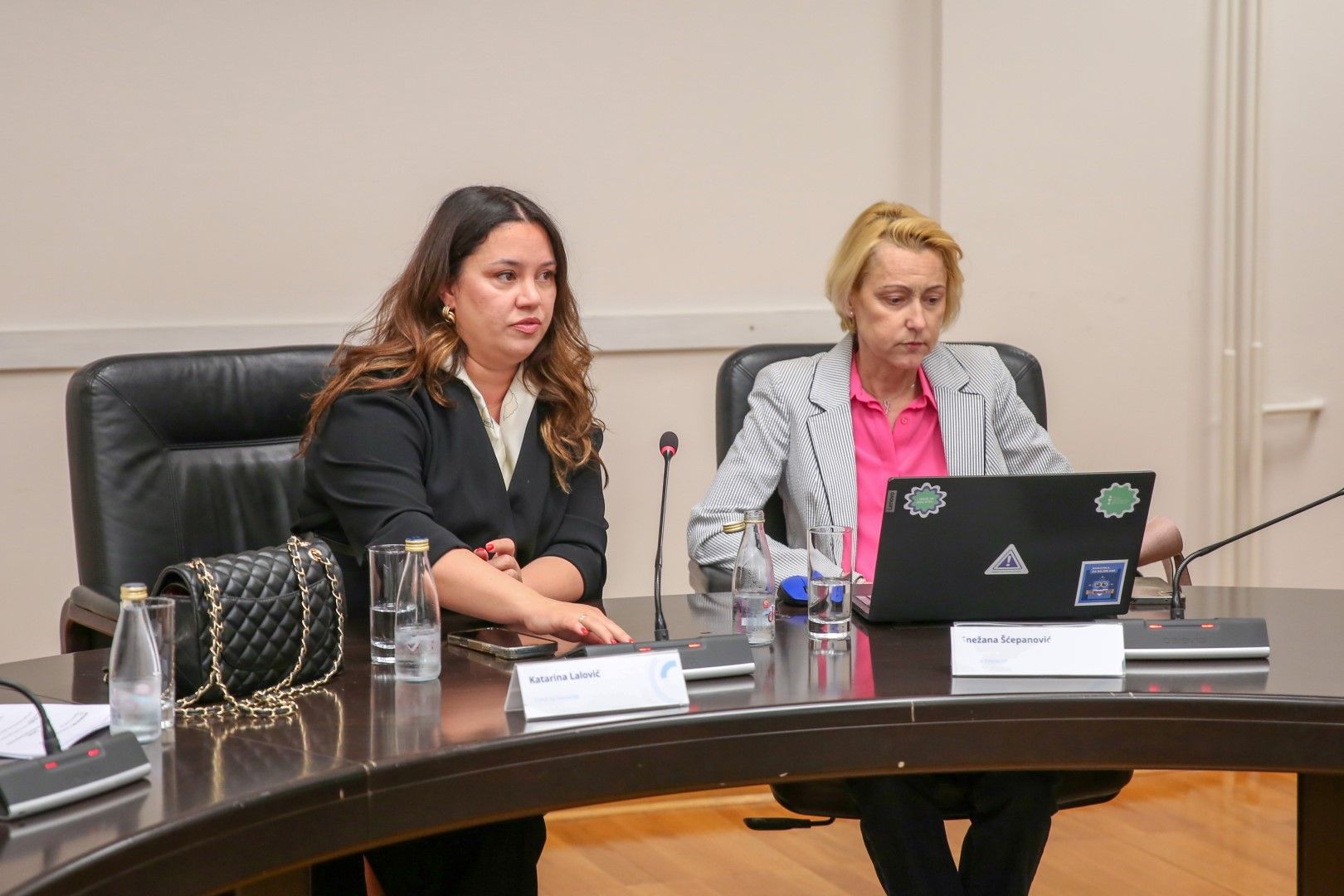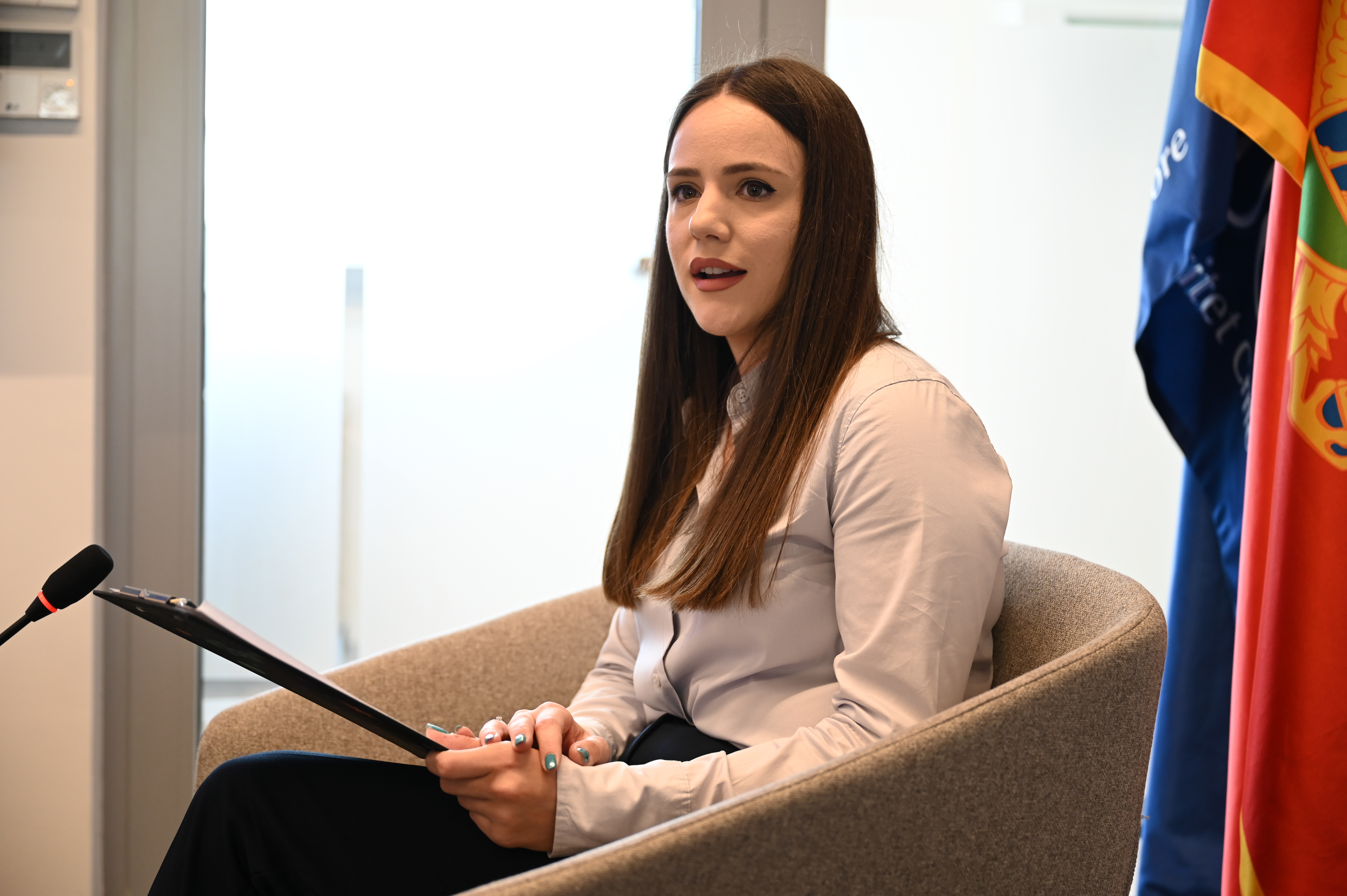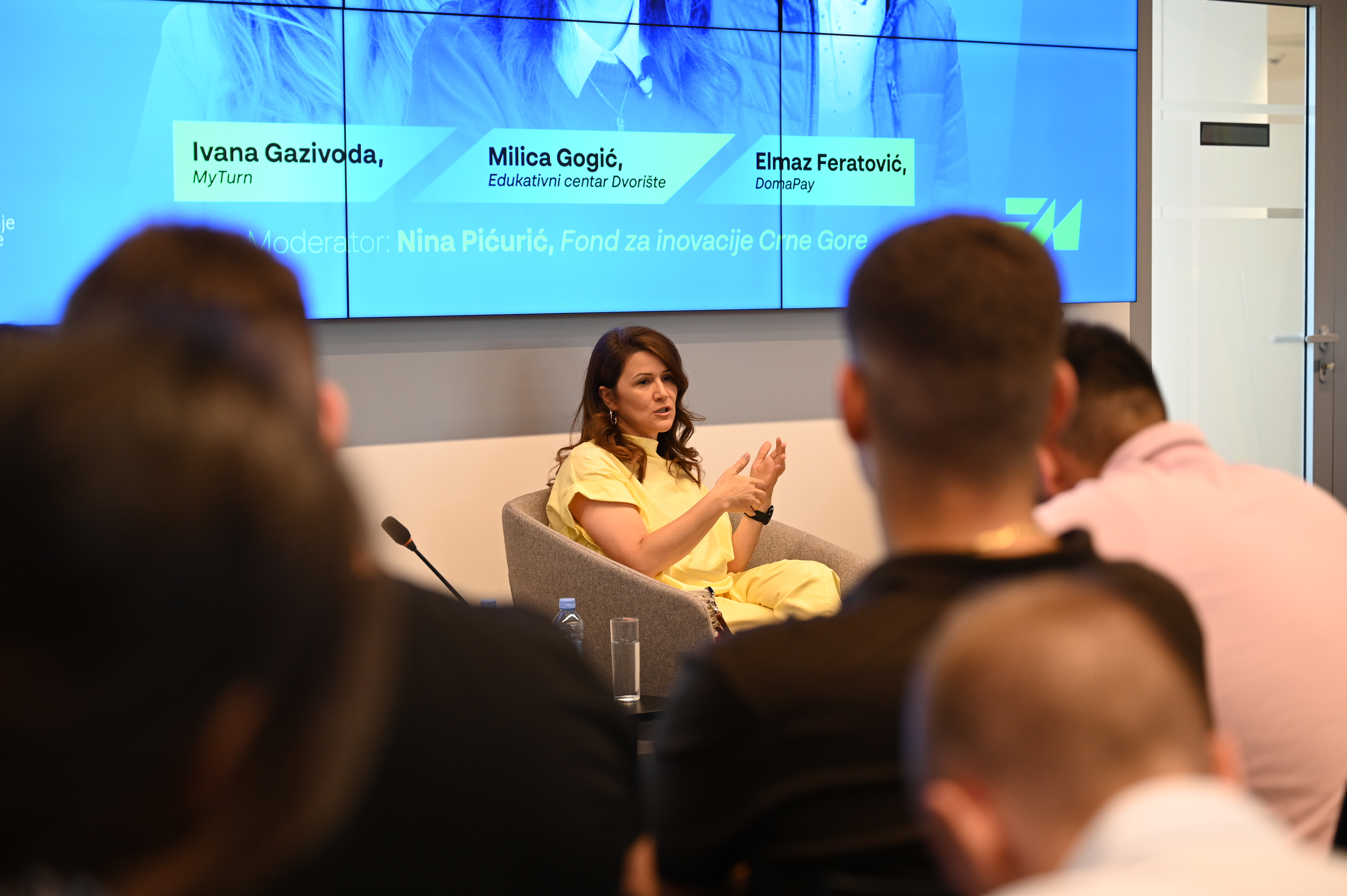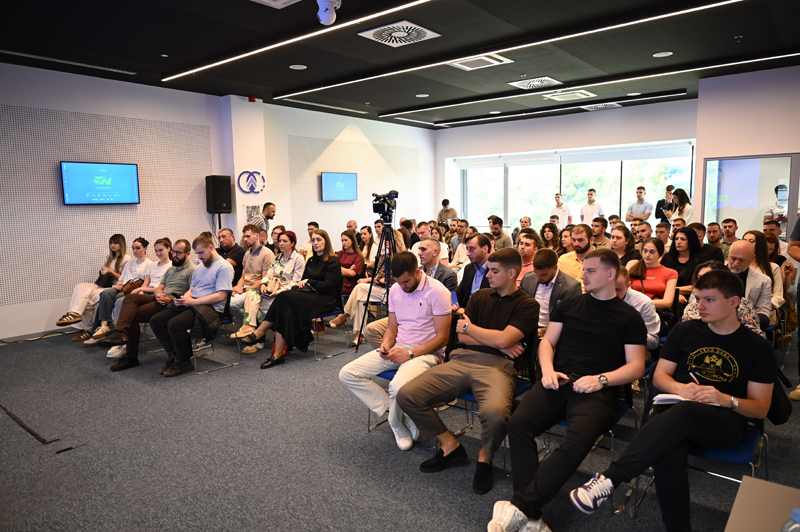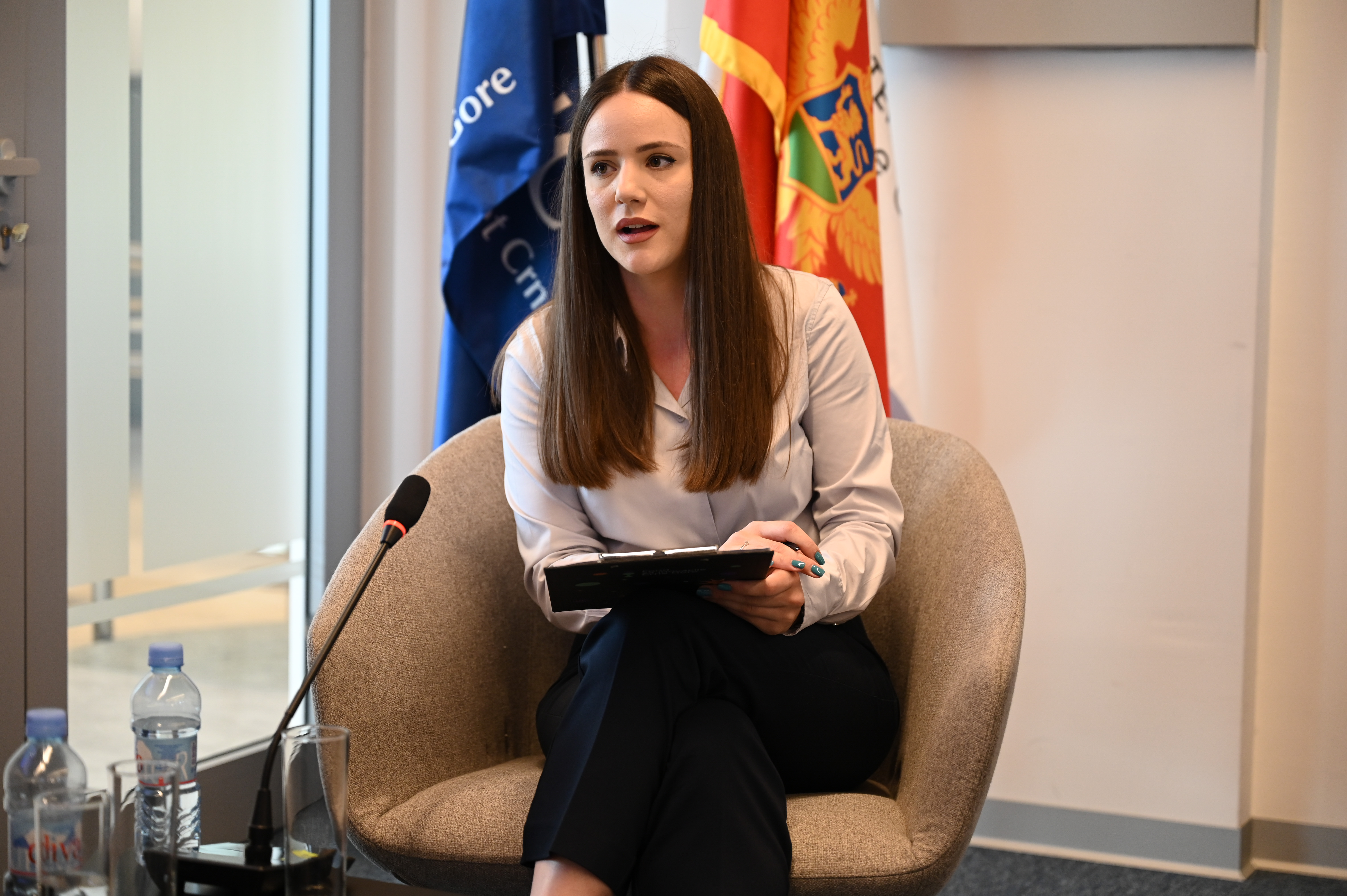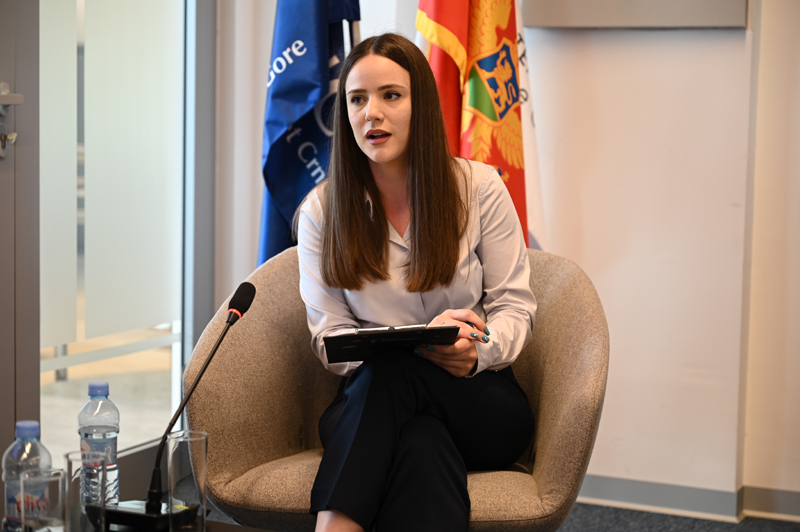
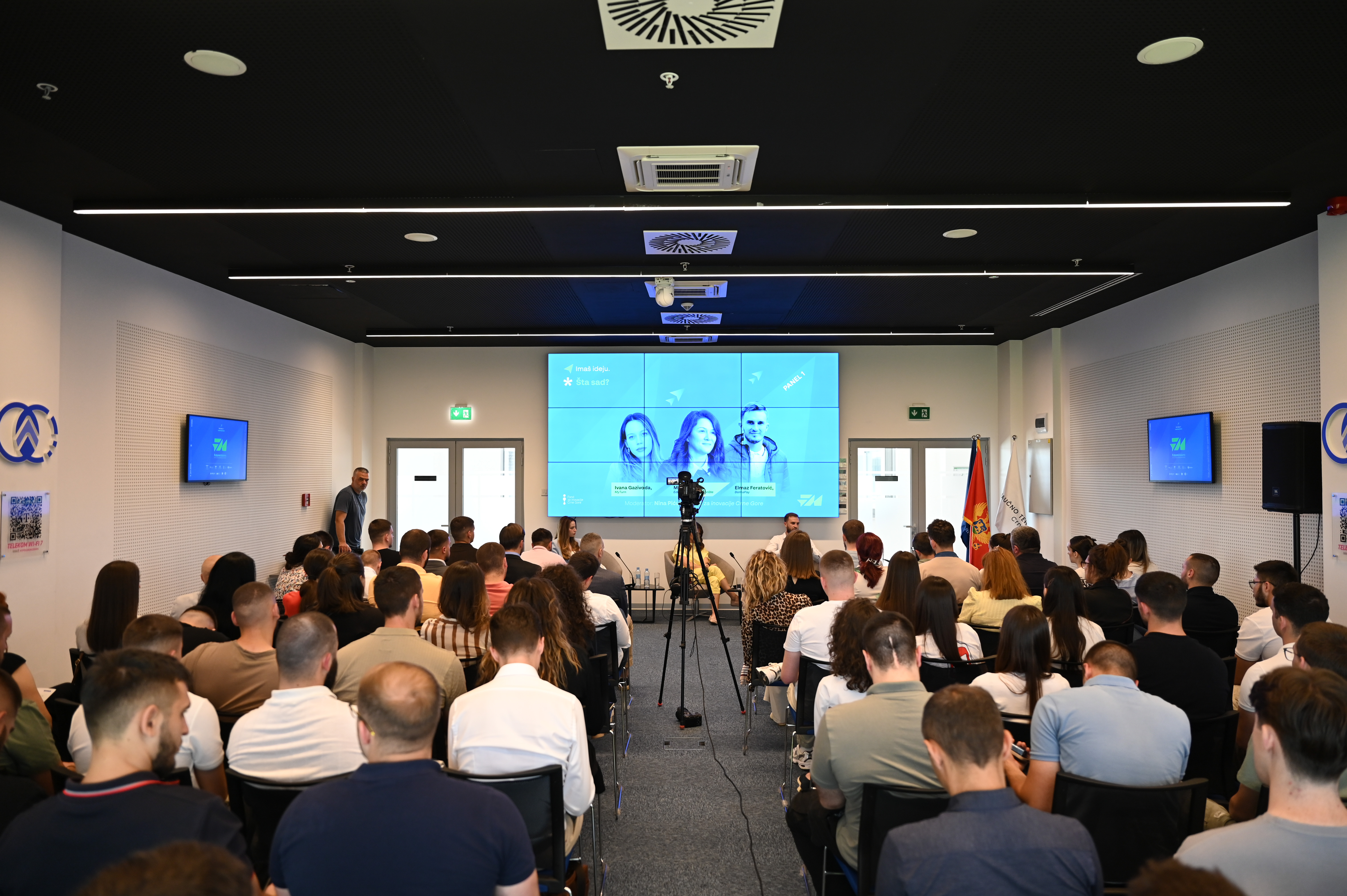
Below we share the text from the panel "You Have an Idea. Now What?", held as part of the "Future Makers 2026" conference. The conversation, moderated by Nina Pićurić – Senior Adviser in the Fund's Project Contracting Department – brought together representatives of startup teams supported through Fund programmes, who shared their experiences of developing innovative ideas, the challenges they faced, and the lessons learned along their entrepreneurial journey.
We share the text in full.
Young people shouldn't wait for the perfect moment to launch a startup – they should start from a problem they understand and make use of the Innovation Fund's support
The startup journey is not a straight line, but a process full of learning, highs, lows and constant adaptation. That is why it is important for young people not to wait for the "perfect moment", but to start from a problem they understand, talk to people, verify whether the problem truly exists, and shape their solution through feedback – drawing on available support programmes such as those offered by the Innovation Fund.
This was the shared assessment of participants at the "You Have an Idea. Now What?" panel, organised as part of "Future Makers 2026" – the closing segment of the Competition for the Best Startup and Entrepreneurial Idea for students of the University of Montenegro, organised by the University's Career Development and Lifelong Learning Office.
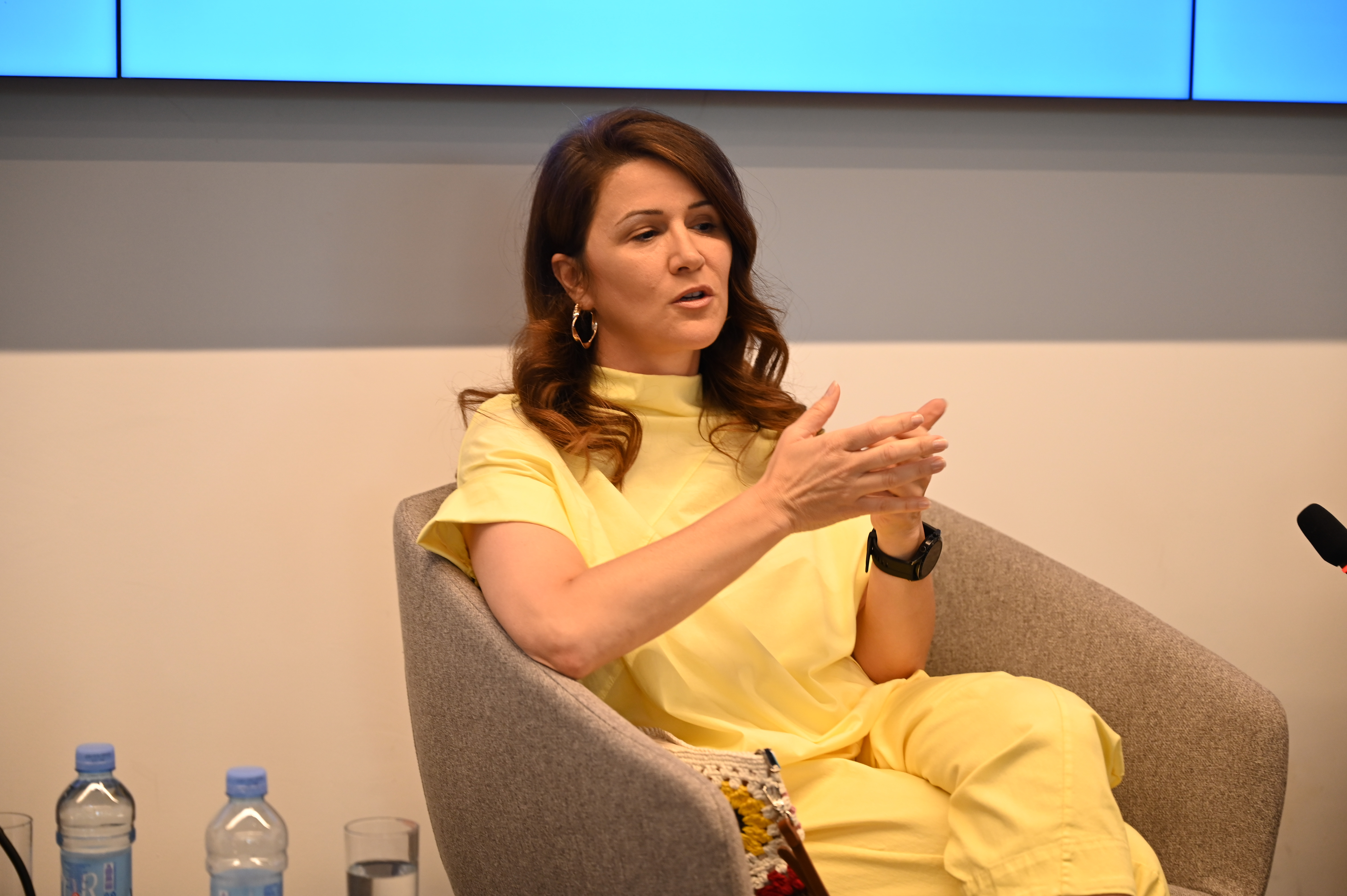
Milica Gogić from the Dvorište Educational Centre said that her idea grew out of years of work in the IT sector, her experience as a parent, and a desire to make complex content accessible to children through play, robotics and digital technologies.
"I've been in IT for over 20 years and worked extensively in software development as a business analyst and consultant. The turning point in my career came when I had my third child and decided to leave the corporate environment. I wanted to stay in IT, but to give my work a more human dimension," said Gogić.
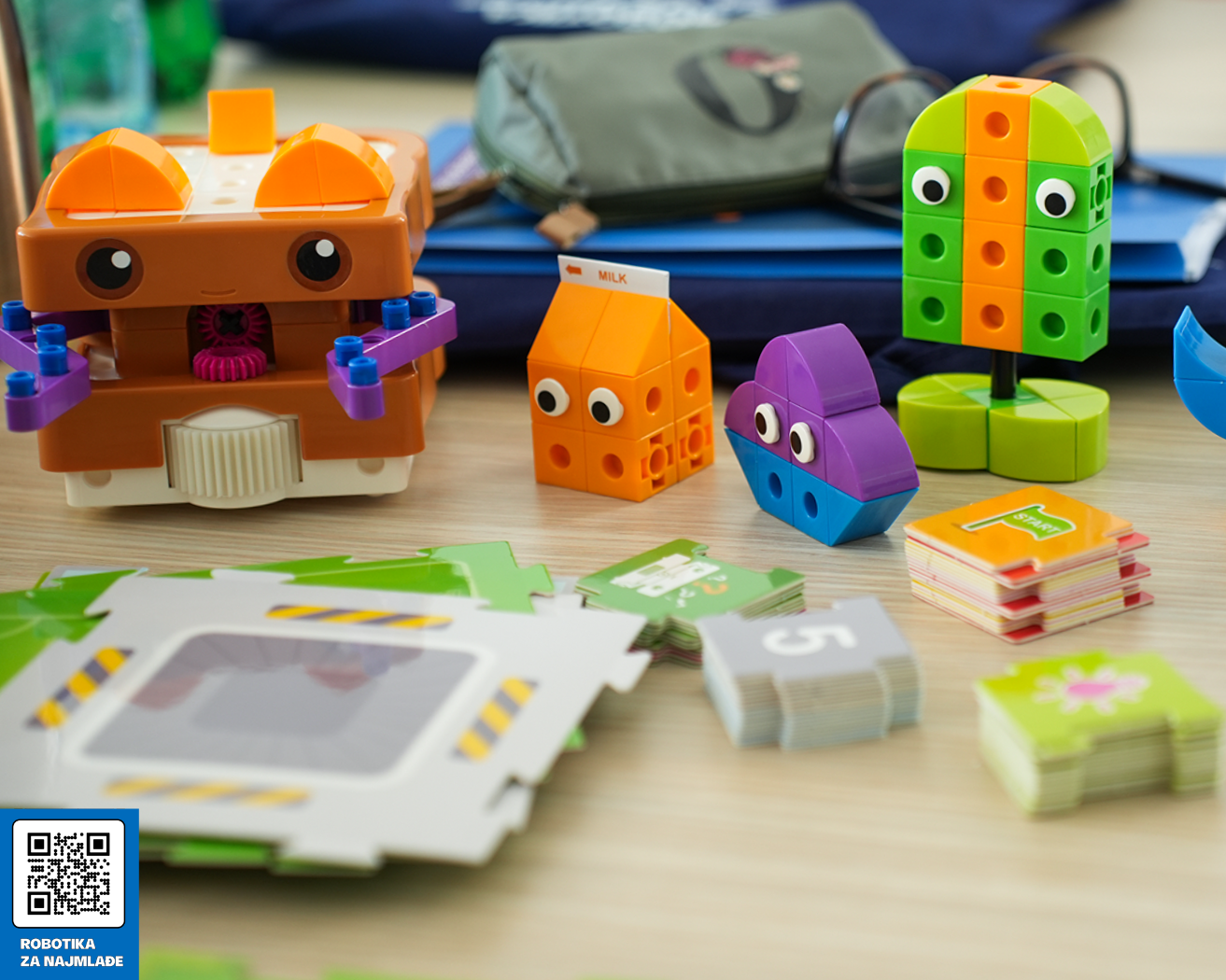
She explained that this led to the creation of Dvorište, a robotics and programming school where children learn through play and creative exploration.
"Through both my parenting and professional experience, I could see that our education system often lags behind in adopting innovations and different approaches to learning. It is not always just about digital technology – it is about how we engage children and how learning can be turned into play," said Gogić.
Speaking about the development of the SHARP platform, she said the idea was to bring Montenegro's cultural heritage closer to children using digital technologies, robotics and gamification.
"I am a mathematician and analyst, and history and geography were always harder for me because I never liked rote learning. Anything that lacked a clear logical connection would quickly slip from my mind. That personal experience was exactly what inspired the idea of bringing content that children don't always find familiar or interesting closer to them through play," said Gogić.
As she explained, the first validation of the idea came during a summer camp in Montenegro, where she tested a map with children that robots "travelled" through, visiting different towns.
"When a robot arrived at a specific location, the children would receive content about that place. At first it was very simple, but it was immediately clear that the concept worked. The children started building a narrative: I've arrived in Kolašin, let's see what there is to know about Kolašin. They were virtually travelling through Montenegro, and that's when I realised that with a little digitalisation we could create something applicable to different topics and regions," said Gogić.
She emphasised that one of the most important steps in developing the idea was bringing a team together.
"No matter how good your idea is, you never go it alone. People are key. I brought together co-founders with different areas of expertise – project management, education and working with children, marketing and sales – while I come from IT, robotics and education. When I realised I wasn't going alone and that I had a team, that was the turning point," said Gogić.
On the subject of challenges, Gogić noted that time is one of the biggest obstacles in the startup process, especially when founders simultaneously hold regular jobs and have family responsibilities.
"Our team consists of four mothers, and all four of us are employed. That gives us a great advantage because we truly understand the problem, but the biggest challenge is time. When you are developing a startup, especially alongside a family and a job, you have to dedicate a great deal of time and energy," said Gogić.
She also highlighted the importance of having a reliable team in moments of doubt.
"The path never runs straight. There are ups and downs, but what matters is that you don't go completely off course. When one of us falters, another says: let's keep going. That is why it is important to have people you trust, people who understand you and who can pull you forward when things get hard," said Gogić.
According to her, the support of the Innovation Fund was significant not only in terms of funding, but also through the structure, mentoring and development of the idea it provided.
"The programme forces you to present your idea clearly and concisely, to examine the problem, the users, the product and the market. Through mentoring you gain experience, guidance and connections, which is extremely valuable for an early-stage startup," said Gogić.
Speaking about the startup ecosystem in Montenegro, Gogić said the country can serve as a good "laboratory" for developing and testing innovative solutions.
"Montenegro has a great advantage in being small. It is easier to reach people, institutions and early users. If you need validation from a hotel, a tourism organisation or some other institution, you can often find a contact and get that first piece of feedback. That network of people can be a major asset," said Gogić.
"If one idea doesn't succeed, that doesn't mean the next one won't. Throughout the entire process you learn a great deal about the market, your users, your team, yourself and how a startup works," Gogić concluded.
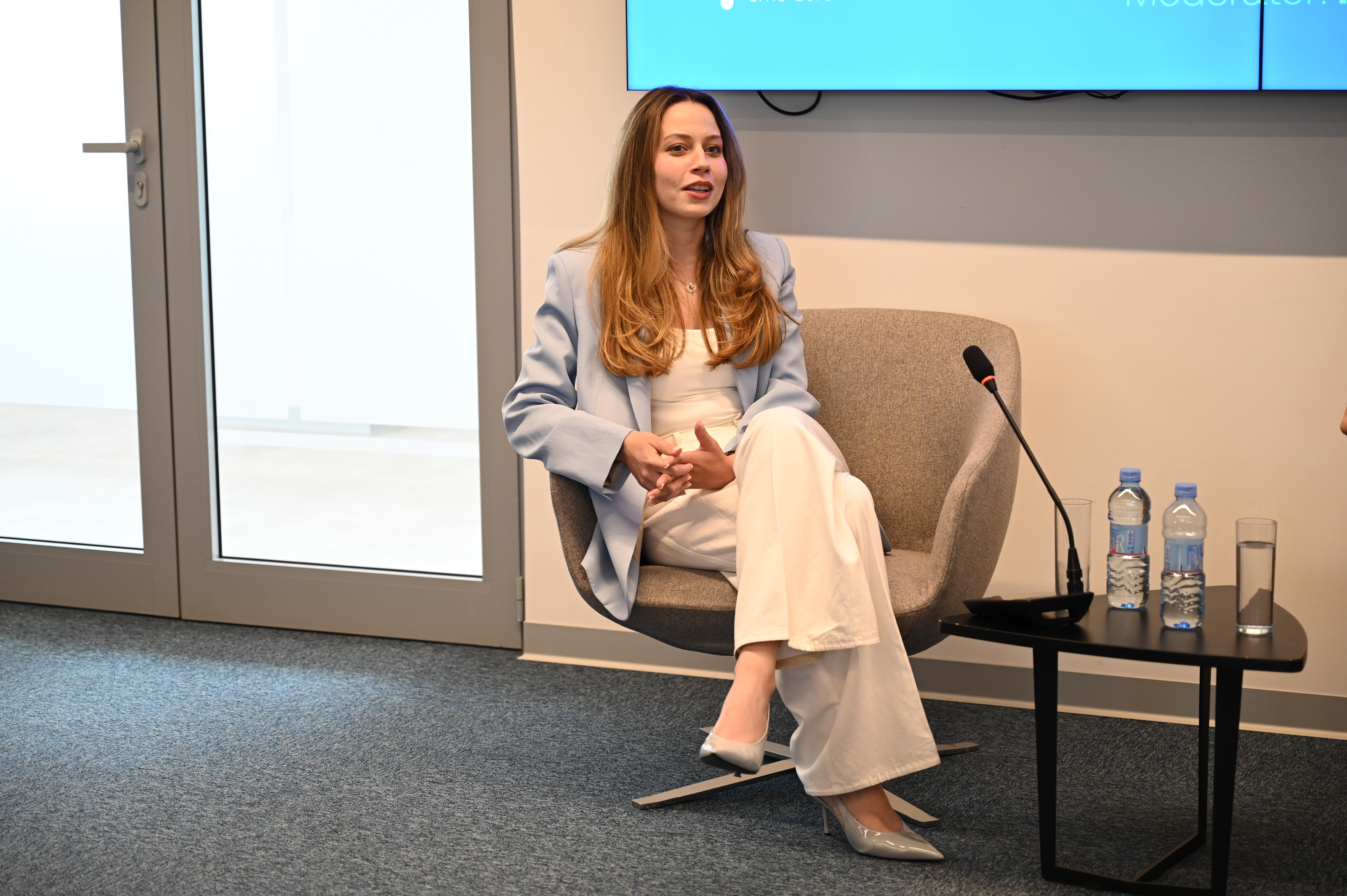
Ivana Gazivoda, representing the My Turn team, said the application was born out of a need to motivate children to take part in household activities, while giving parents a tool that makes everyday chores more organised and engaging.
"My Turn is an application that gamifies household activities for children. It is aimed at parents of children aged five to 13, with the goal of motivating children to get involved in useful activities – chores that, when we were children ourselves, were often boring," explained Gazivoda.
The idea, she said, emerged during an accelerator programme in Portugal, where she and her co-founder Milica were thinking about a problem they could develop and solve.
"Even while we were still in Montenegro, we were thinking about what we could build, and we both kept coming back to the same experience – neither of us ever liked doing household chores. At the same time, we noticed that a large share of those chores still tends to fall on mothers. Those were the problems we wanted to solve: motivating children and achieving a fairer distribution of responsibilities within the family," said Gazivoda.
She stressed the importance of grounding a startup idea in a real problem – and of verifying that problem with actual users rather than assuming it exists.
"It is much easier when you are solving a problem from the perspective of people who truly experience it. When we started, neither of us were parents, so it was especially important for us to step outside our own circle and talk to our target audience. It is only when you hear from parents, understand their needs and dilemmas, that you know where to go and how to develop your product," said Gazivoda.
Through conversations with parents, the team confirmed the problem was real, and additional signals came from markets outside Montenegro.
"Today, even though we are not actively running marketing campaigns in the United States, parents are finding the application in app stores and downloading it on their own. That was a signal to us that this idea makes sense beyond Montenegro's borders – which is the goal of every startup," said Gazivoda.
Speaking about working with the Innovation Fund, she highlighted that mentoring support and feedback helped the team refine the idea further.
"When we entered the process with the Innovation Fund and received mentoring support, we came to appreciate even more how important it is for an idea to be tested and validated. Through the feedback of mentors and the people we spoke with, we received confirmation that we are solving a problem that is real and relevant," said Gazivoda.
She noted that challenges are an inherent part of the startup journey.
"In a startup, there are definitely many ups and downs. That is something everyone tells you before you enter the process, but until you actually start developing your own idea, you don't fully grasp how demanding that path truly is. There were moments when you think about giving up, but then something good happens – you get positive feedback or see someone using the app – and that gives you the energy to keep going," said Gazivoda.
"Just start. Nobody knows all the answers at the beginning, but once you begin, things open up and you can see the next step. Support programmes can be a great way to learn how to present your idea, how to develop it and how to get feedback," said Gazivoda.
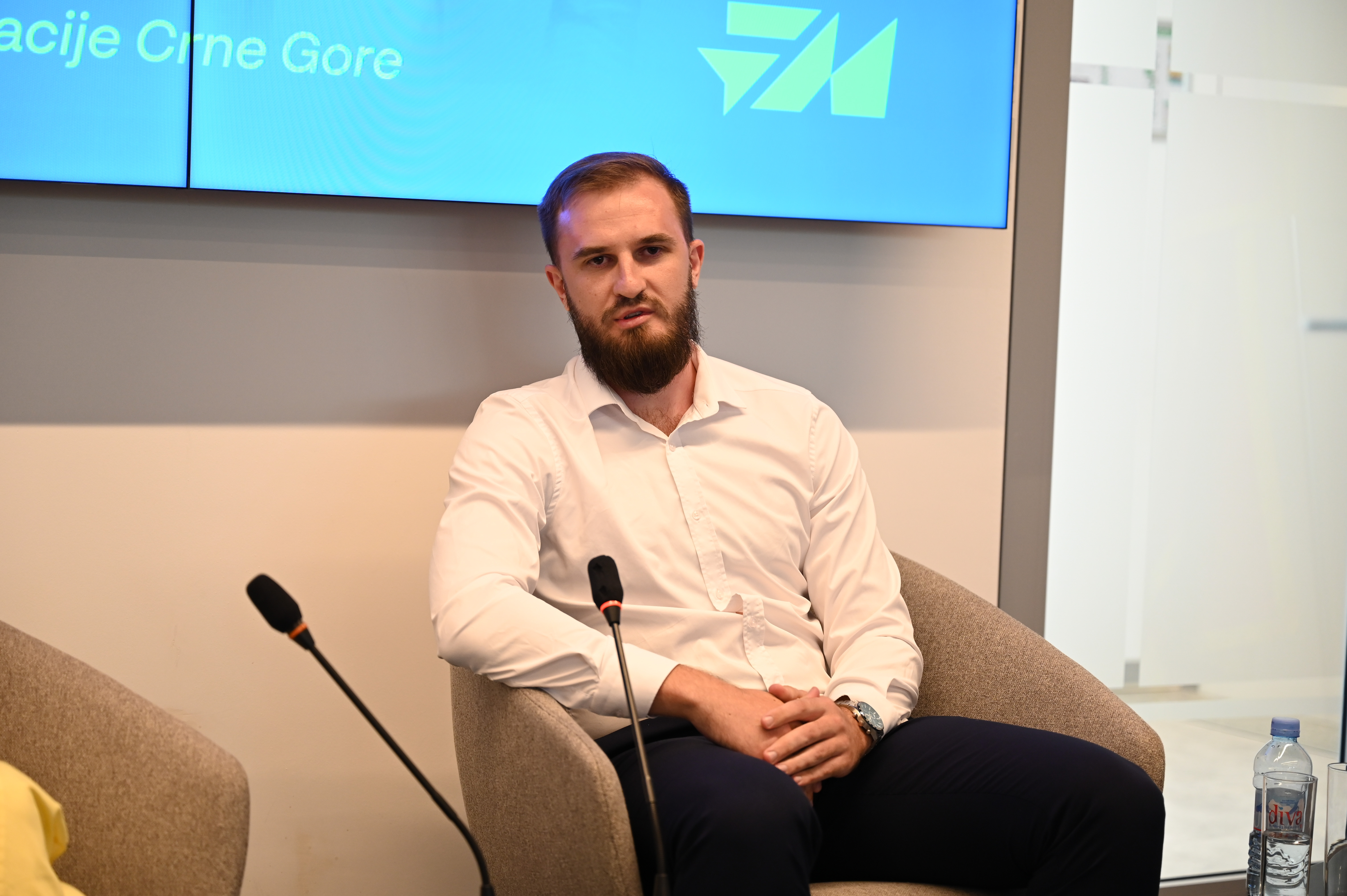
Elmaz Feratović, co-founder of the DomaPay startup, said that his team is working on the centralisation and digitalisation of utility bills, allowing users to track and pay all their obligations in one place.
"It happens often – especially when you move to a new flat or are renting – that you don't have all your bills in one place. You don't know which ones have been paid, whether a bill ended up with a neighbour, or whether it even reached the landlord. That is how we came up with the idea of centralising all bills in one place," said Feratović.
He explained that DomaPay gives users an overview of all bills for one or more households and allows them to pay with a single click, with tracking to see which bills have been paid and which have not.
"The idea came from personal experience. Bills would go missing, we wouldn't pay them for several months, and then a large amount would suddenly arrive all at once. The other problem was the payment process itself – you had to go to the EPCG platform, then Čistoća, then the water utility and other systems, which all takes time," said Feratović.
Although he comes from a technical background, he said that through building the startup he came to understand that technology alone is not enough.
"Even though I come from a technical perspective and am an engineer by profession, developing this solution required much more than technology. It was necessary to understand the business side, validate the idea and research the market," said Feratović.
According to him, the first validation came through informal conversations with neighbours, friends and people in his immediate environment, followed by a formal survey.
"We found that more than 55 percent of people still pay bills at counters. That means they are losing time waiting in queues or switching from one platform to another. After market research and validation, we were more confident that Montenegro needs a solution like this," said Feratović.
He identified the closed nature of large institutions' systems as one of the biggest challenges.
"From our perspective, one of the greatest challenges was the closed systems of large institutions. Data is not easily accessible or interconnected, and the documentation and procedures for integration are not always straightforward. That was a significant challenge, but we tried to adapt, find a workable path and move towards the final solution," said Feratović.
Reflecting on the lessons of the startup process, Feratović said that if he were starting over today, he would place greater emphasis on the market, users and business model from the very beginning.
"At the start, I was mostly focused on making the product technically perfect – which is often genuinely unattainable. If I were starting fresh today, I would first focus on a detailed analysis of the market, the users and the sustainability of the business model. At the end of the day, the user doesn't care what technology something was built with – they care whether it solves their problem and whether it is sustainable," said Feratović.
He assessed that the Innovation Fund's support carries particular significance because it gives a startup validation that its idea has potential.
"The Fund's support was important not only financially, but also as validation. When you receive confirmation that your solution has been recognised as a startup, it gives you additional confidence. The mentoring was especially valuable – we went through market analyses, business model reviews and various tools that we might not have known how to apply on our own," said Feratović.
"My advice is: validate. Talk to people from different backgrounds, not just your target group. Sometimes the best feedback comes from people who know nothing about your field. Start with paper and pen, write down your idea and begin testing it through conversations," said Feratović.
Following the conclusion of the panel, a pitching session took place alongside a presentation of startup ideas by university and secondary school students, culminating in the announcement of the winners of the Competition for the Best Startup and Entrepreneurial Idea for students of the University of Montenegro.